
Disclaimer: Today we are going to discuss a couple of the events in the Gospel of Luke. The Gospel of Luke, like the other three canonical gospels, does not include the name of its author within the text itself. The title “Luke” is based on early church tradition, which attributed the book to Luke the physician, a companion of the Apostle Paul mentioned in a few of his letters. While this attribution has been widely accepted throughout Christian history, it’s important to note that it is not stated directly in the gospel. Most scholars date the Gospel of Luke to around 80 to 90 CE, placing its composition several decades after the life of Jesus. According to the opening verses, the author’s intent was to gather information from earlier sources and eyewitnesses in order to create an “orderly account” for the benefit of believers. To make things easy, we will conceed authorship in this blog.
So The Book Of Luke opens his gospel with this classy, confident statement:
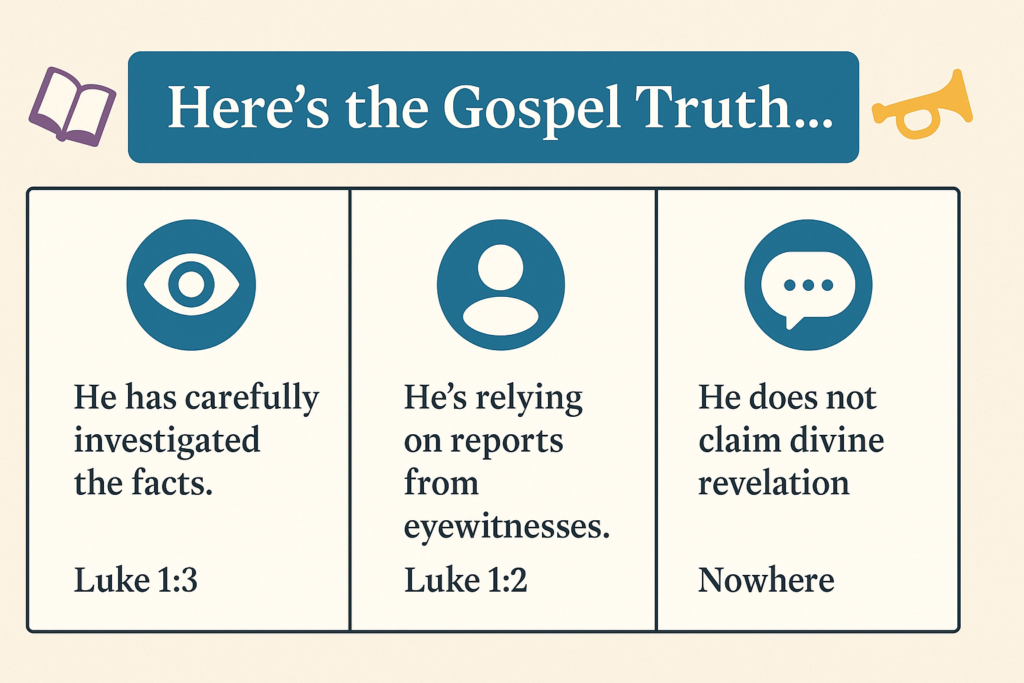
“I’ve carefully investigated everything from the beginning and decided to write an orderly account…”
Ah yes, the ol’ “I did my own research” defense, biblical edition.
Now, Luke doesn’t claim to be an eyewitness, which is refreshingly honest. Instead, he’s basing his story on what the eyewitnesses supposedly handed down. But this is where things get… let’s say, suspiciously cinematic.
Let’s take a walk through two of Luke’s most private scenes, you know, the ones no human being could have possibly witnessed, but which he describes in vivid, dramatic detail anyway. Just normal historian stuff. Totally above board.
Exhibit A: Mary and the Angel Gabriel
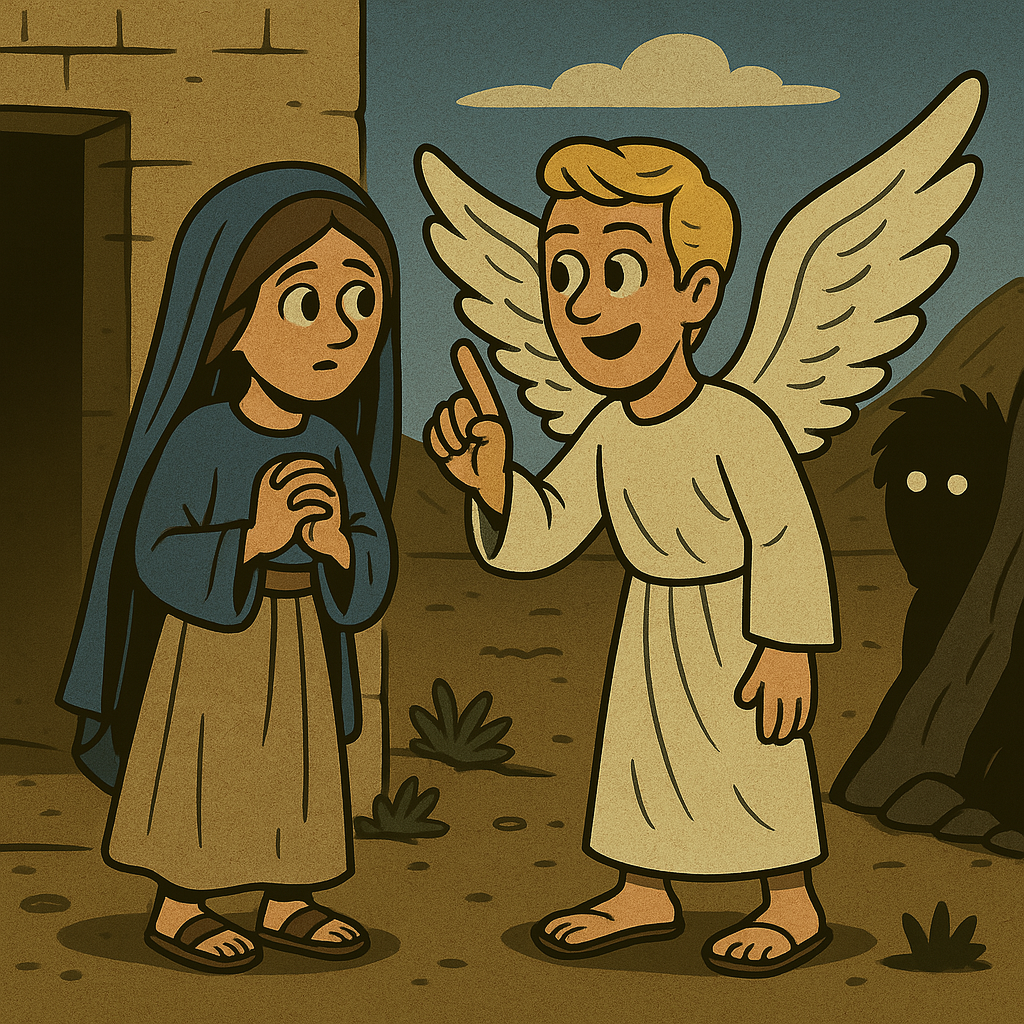
Luke 1:26–38 gives us a tender, deeply personal scene between Mary and the Archangel Gabriel. He shows up like a glowing UPS driver from God, drops the immortal line “You will conceive a son,” and peaces out. Mary, to her credit, doesn’t freak out or pepper-spray him. She just nods, says “Let it be,” and becomes the vessel for salvation. Quiet day in Nazareth.
Now pause. Who was there to see this?
No one.
Not Joseph. Not a servant. Not even a stray cat.
Just Mary and an invisible cosmic messenger.
So how did this make it into Luke’s carefully-researched “orderly account”?
What are our options here?
- Mary told someone later. “Oh yeah, by the way, an angel showed up and got me pregnant with the Holy Spirit. Don’t worry it’s God’s baby.”
- Someone made it up to fit the theology.
- Luke was secretly psychic and astral-projected into the past.
I’ll let you pick your favorite. Mine’s Option 2, because it smells the least like celestial cologne.
The truth is, Luke wasn’t recording journalism. He was telling a mythic origin story — a theological prequel. Not reporting history, but mythleading readers with something that looks historical but operates like divine fanfiction.
Exhibit B: Jesus and the Devil in the Wilderness
Jump to Luke 4:1–13. Jesus, alone in the desert, freshly baptized and probably hangry, is approached by Satan. They have a theological rap battle involving bread, power, and suicide-by-temple-rooftop. Jesus wins by quoting scripture (a move I do not recommend trying in real-world arguments with manipulative people), and the Devil backs off like a cartoon villain.
Again — who witnessed this?
Was Luke hiding behind a rock?
Was there a desert squirrel who later dictated the transcript to Paul?
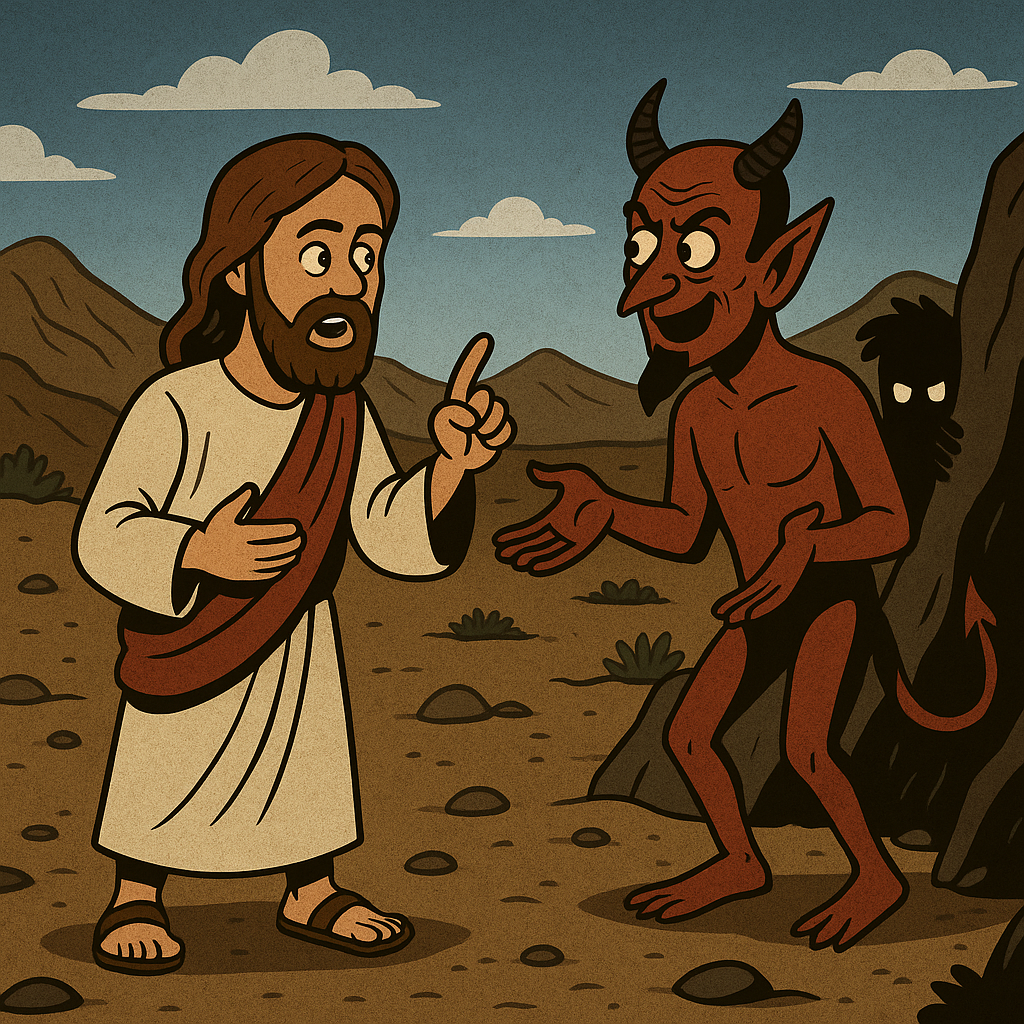
Even if Jesus told someone later, this reads less like, “Hey, I had a tough 40 days” and more like allegorical storytelling about resisting temptation. It’s Jesus vs. the Devil, representing good vs. evil, in a setting as isolated as humanly possible. It’s supposed to be a symbol. But Luke doesn’t tell you that — he presents it like a diary entry.
This is where mythleading really shines. Because it’s not just invention — it’s invention disguised as researched history. A beautifully polished theological tale in historical cosplay.
So What’s the Harm?
Well, here’s the thing: if you’re going to claim your story is rooted in eyewitness testimony, you probably shouldn’t fill it with private conversations between humans and angels, or desert duels with Satan. That’s like writing a biography of George Washington and confidently describing his dreams, unless he wrote them down himself (spoiler: Jesus didn’t leave a journal).
The issue isn’t just that these events are miraculous. It’s that no human could have witnessed them, yet they’re sold as part of a reliable account.
| Now, some folks will try to patch the hole by saying, “Well, God must have told Luke what happened.” Cute idea, but let’s not skip over the massive leap that requires. The author of Luke doesn’t claim divine revelation anywhere in the entire book — not in the introduction, not mid-gospel, not even when Jesus ascends into the clouds. No dreams, no angelic dictation, no “the Lord spoke to me.” Instead, Luke says he’s writing based on secondhand sources and personal investigation — you know, regular human stuff. So unless God was secretly feeding him transcripts behind the scenes like some kind of ghostwriter from Heaven, that explanation’s not in the text. And if you’re going to assume divine dictation without the author claiming it, then congratulations: you’re now filling in plot holes with fan theories. |
So Luke wasn’t lying exactly — but he was certainly mythleading. Telling sacred stories with the tone of a TED Talk and the footnotes of a Tolkien fanfic.
Final Thought
I have no problem with myth. Myth is powerful. Myth inspires. Myth gets people to recycle or fight dragons or stop being jerks to the elderly.
But when myth starts pretending to be history, especially in the name of divine truth, I get twitchy. Because that’s when people stop asking questions and start building doctrines on… well, angel whispers and sand-swept soliloquies with Satan.
So next time someone says, “Luke is based on eyewitness accounts,” just smile, nod, and ask:
“Oh cool — which eyewitness was there when the angel visited Mary?”
And if they say “God,” you have my full permission to mythlead them straight to this blog.